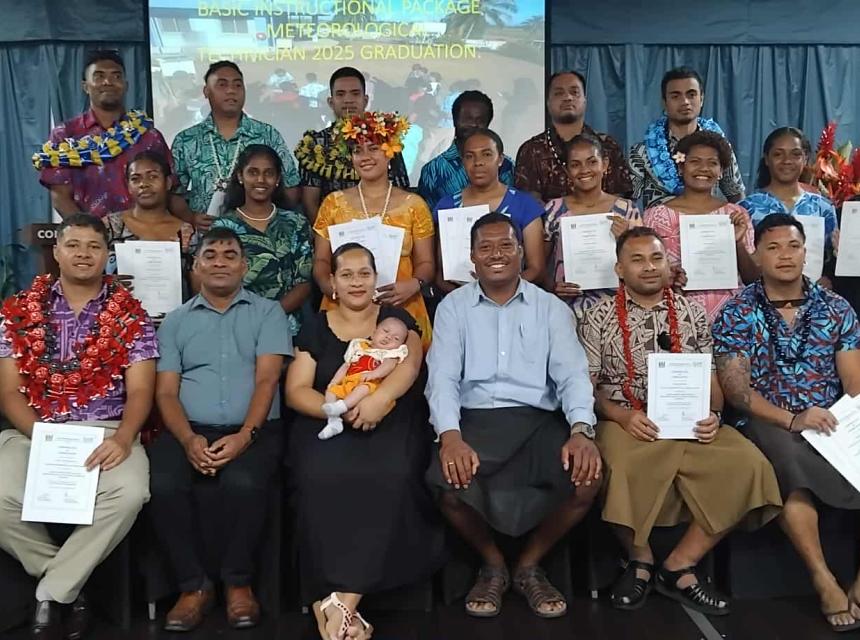
Give to Gain: Viva Veikoso's Journey Through Pregnancy and Meteorology Training
Every morning for six months, Viva Malia Veikoso would prepare herself and walk to the Fiji Meteorological Service office in Namaka, Nadi. She was four months pregnant when the Basic Instructor for Public Weather Services Training began in May 2025, Viva faced a reality that would have deterred many: intensive technical training, monthly exams requiring 70% pass rates, assignments, projects, and the physical demands of pregnancy, all while thousands of miles from her young children and family in Tonga.
"I said to myself, I can do this," Viva recalled. "I prayed to God for help and for strength so that I can make it."
Viva did more than make it. On 31 October 2025, Viva Veikoso, Meteorological Technican at the Tonga Meteorological Services graduated from the demanding six-month programme. Between the theory component and the on-the-job training that followed, she also brought her son Kenji safely into the world, supported by a meteorological community that exemplifies this year's International Women's Day theme: Give to Gain.
Viva's journey was far from easy. Arriving in Nadi alone while her cohort members travelled in pairs from their countries, she navigated homesickness, pregnancy stress, and challenging pace of technical meteorological training. The coursework was demanding: four months of intensive theory, major assessments, competency exams, followed by two months of on-the-job training. Every month brought examinations that required maintaining high standards, all while her body was creating new life.
"Things were getting harder and harder for me but I didn't give up," she said. "I forced myself every morning to go to class."
What transformed Viva's journey from endurance to triumph was the support that surrounded her. Her trainer at the Fiji Met Service demonstrated the kind of flexibility that enables women to succeed in technical fields. He gave her permission to rest when needed and allowed her to attend hospital checkups, yet Viva never slackened her commitment. She would go straight from medical appointments back to her studies, determined to pass alongside her peers.
Her fellow trainees, three women from across the Pacific region, became more than classmates. Though single themselves, they worried about Viva's wellbeing, accompanied her to hospital checkups, and found inspiration in her determination. "Every time they saw me, I inspired them and made them think of getting a husband one day and having a family," Viva shared with a laugh, her warmth evident even in recollection.
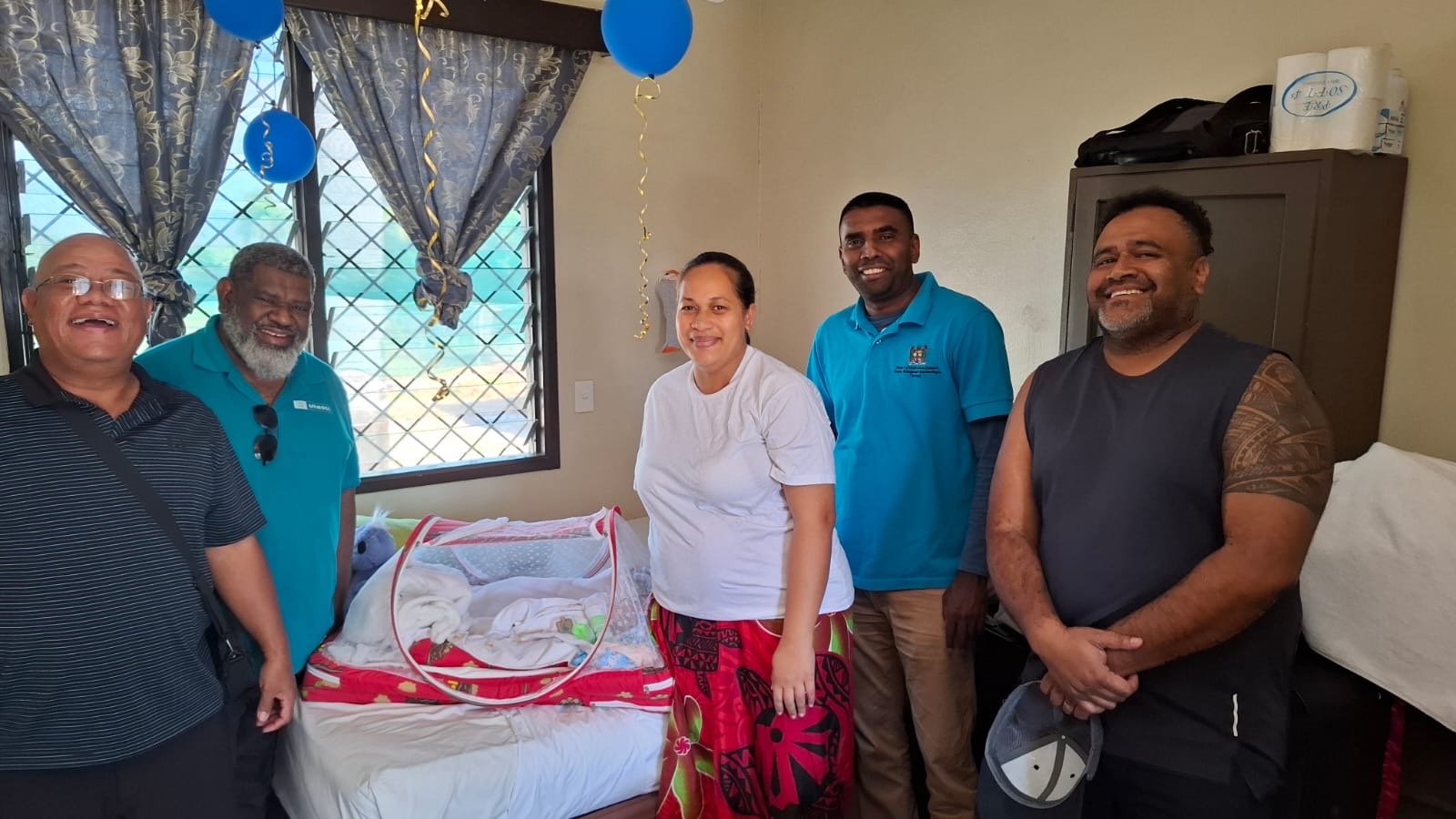
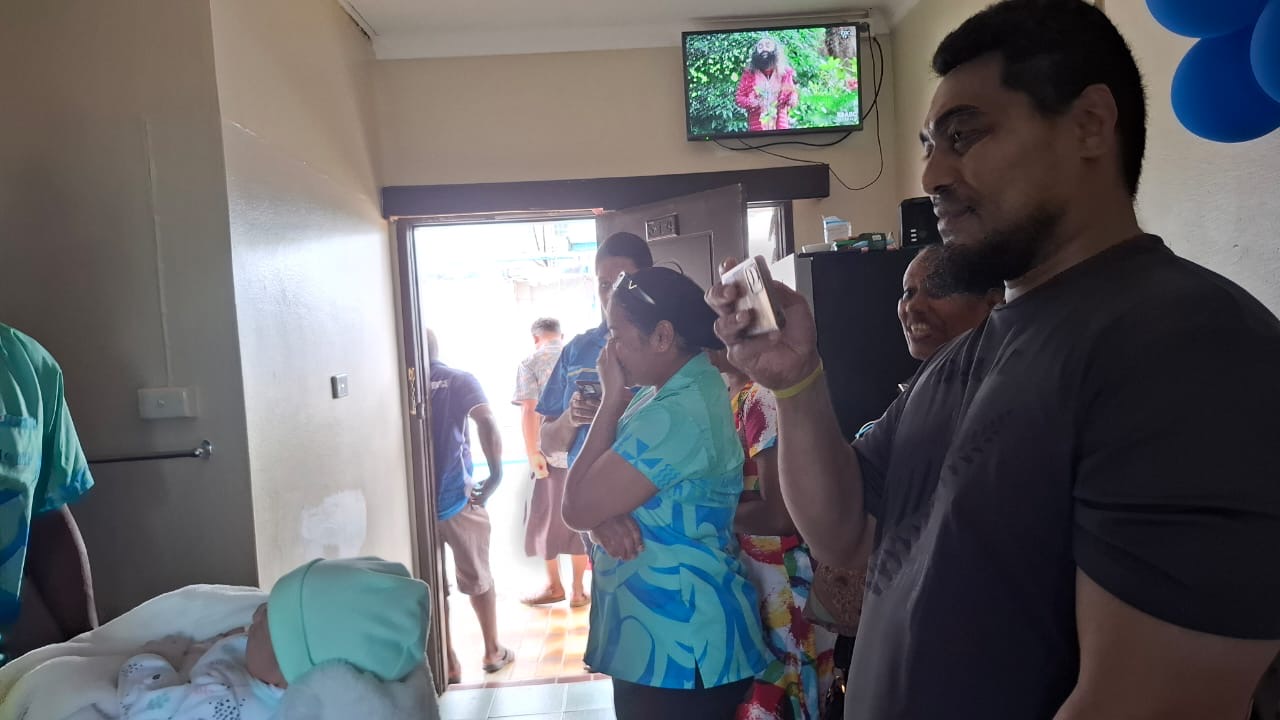
The support extended far beyond the classroom. After Viva gave birth to Kenji, the entire Fiji Met Office staff, hotel workers, and their supervisors came to visit mother and baby. Staff from the Climate Science and Information Programme (CSI) at SPREP, Director Salesa Nihmei and Traditional Knowledge Advisor Siosinamele Lui visited Viva and newborn Kenji, having travelled from Samoa to do so.
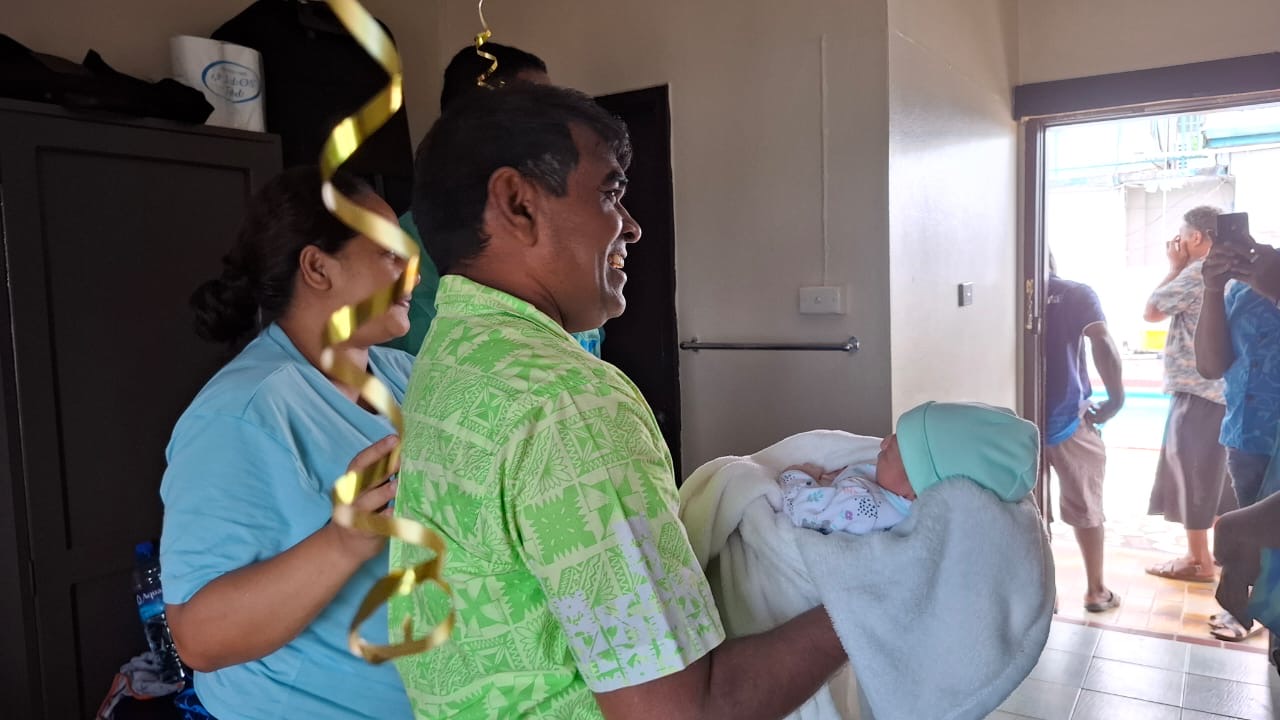
"I felt more love and support from people around me even though I was far away from home," Viva reflected. "I'm so grateful and was blessed by many people."
That support took practical forms too. The Climate Science and Information Programme at SPREP moved Viva to a master room with a kitchen and two beds at the Grand Melanesian Hotel, ensuring she and Kenji had comfort during those precious early weeks. Her husband arrived to care for their newborn while Viva completed her final two months of on-the-job training. The nurses and doctors at Nadi Hospital provided care that Viva still remembers with gratitude.
Even baby Kenji's name carries the imprint of the meteorological community's investment in this family's future. Weather Ready Pacific Programme Manager, Ofa Faanunu named him after meteorology itself, a tribute that moves Viva deeply. "I pray that I may live long to raise this little human being and tell him all about his story there. I'll make sure that this little one will become a meteorologist one day," said Viva.
Viva's achievement represents more than one woman's success. It demonstrates the CSI teams’ commitment to supporting women in Pacific meteorology through practical, family-friendly approaches. Across all its training initiatives, including the European Union-funded ClimSA Knowledge Brokers training that empowers women to translate scientific information into usable formats for their communities, the programme pays specific attention to women's participation and creates enabling conditions for their attendance. This matters because women serve as primary educators in Pacific communities and as effective communicators in the workplace, making their involvement in climate science essential to reaching families and strengthening regional climate resilience.
For Viva, graduating meant achieving a personal goal of furthering her education while representing her organisation and country abroad. But her reflections reach beyond individual achievement to embrace all women facing their own challenges.
"I just want to share with every beautiful woman around the world that we can do anything in life," she said. "There is nothing that can discourage us from achieving our dreams. We just have to put God first and then our family and our careers. Just be strong and be courageous to pursue every dream that you have."
As International Women's Day 2026 reminds us to Give to Gain, Viva’s story illuminates the truth, that when we invest in women's potential and build communities of genuine support, everyone benefits. The Pacific region gains qualified meteorologists, families gain empowered role models, and communities gain the climate resilience they need to face an uncertain future.
Viva Malia Veikoso walked into that Nadi classroom four months pregnant with determination in her heart. She walked out with her qualification, her baby son Kenji, and proof that giving creates strength that multiplies across generations.
- Log in to post comments