Supporting Weather-Ready, Inclusive Communities in Niue: Communications and GEDSI Training
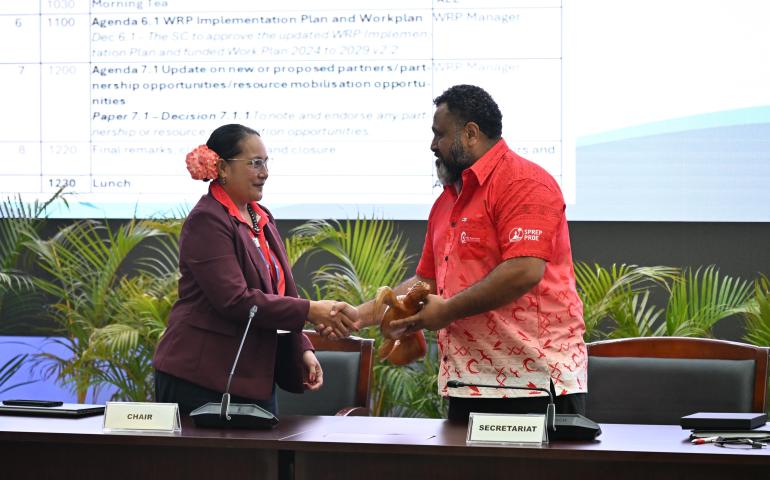
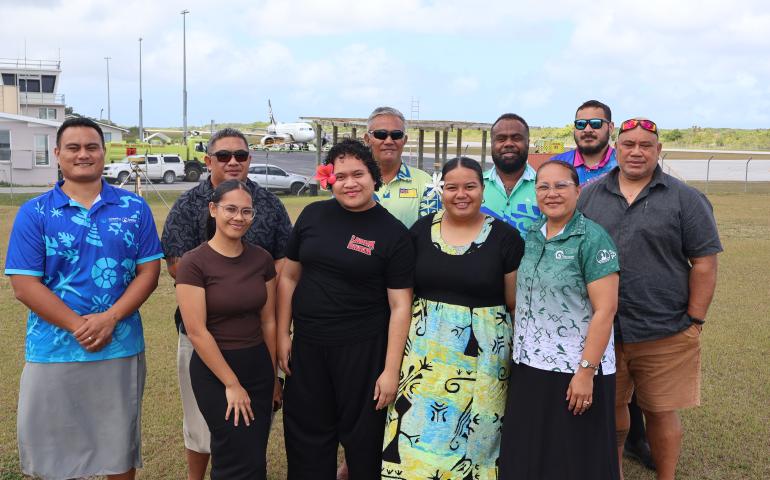
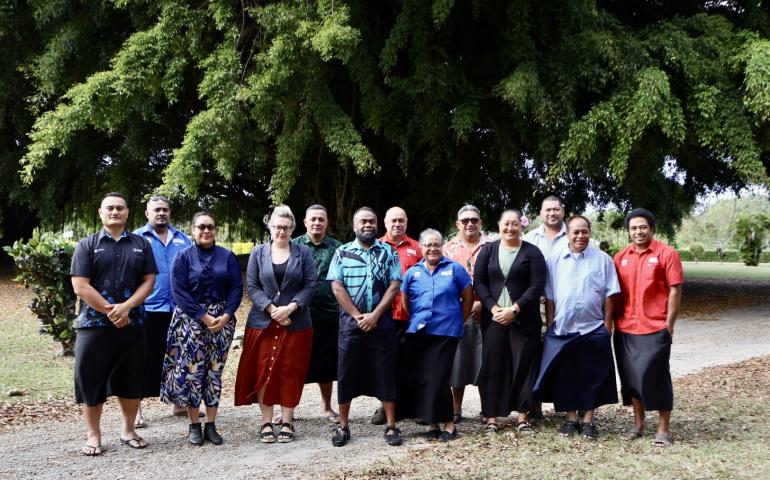
Alofi, Niue – In a small island nation where a single passing storm can affect every household, the ability to communicate timely and clear weather information is more than a technical challenge: it is a matter of community safety. On 24-25 March 2026, representatives from Niue Meteorological Services, government sectors, the National Disaster Management Office (NDMO), communications companies, women’s groups, community elders, and local media came together for a two-day training facilitated by the Weather Ready Pacific (WRP) Programme, implemented by the Secretariat of the Pacific Regional Environment Programme (SPREP).
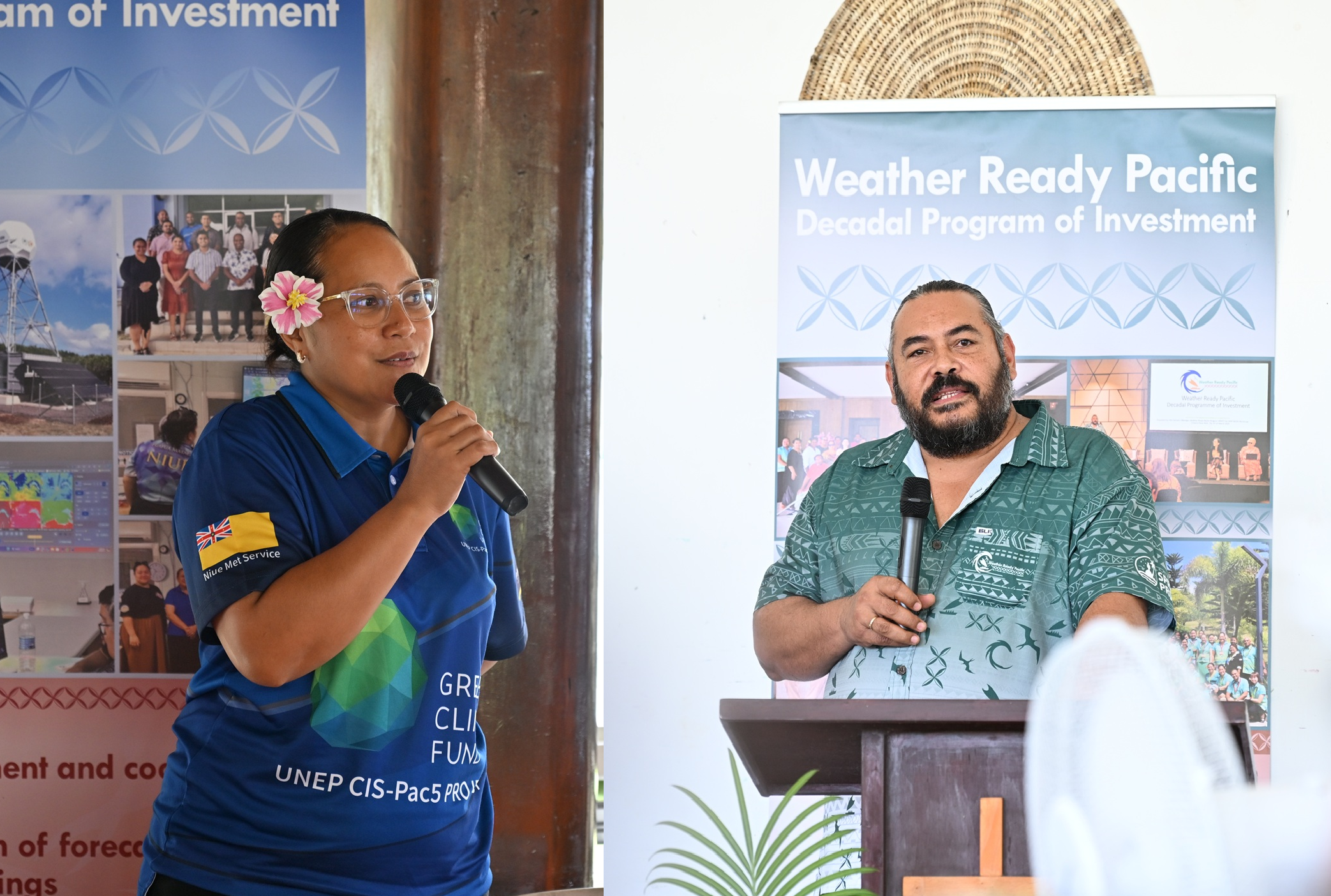
Working closely with Niue Met Services Director Rossy Mitiepo, the WRP Programme team delivered a communications training on Day 1 and a Gender Equality, Disability and Social Inclusion (GEDSI) training on Day 2; two workshops that proved deeply and naturally connected.
Niue faces real constraints in reaching its population with weather and hazard information. Existing mediums of communication channels, both traditional and digital, currently provide timely and accurate information to the community. The training aimed to strengthen community understanding to build resilience.
Ms Rossy Mitiepo, Director of Niue Meteorological Services, shared a valuable inside look at how Niue's forecasting and disaster warning systems operate. Her insights reinforced a message that resonated strongly throughout the room: that effective disaster preparedness depends on a strong, well-coordinated relationship between the Met Office and the NDMO.
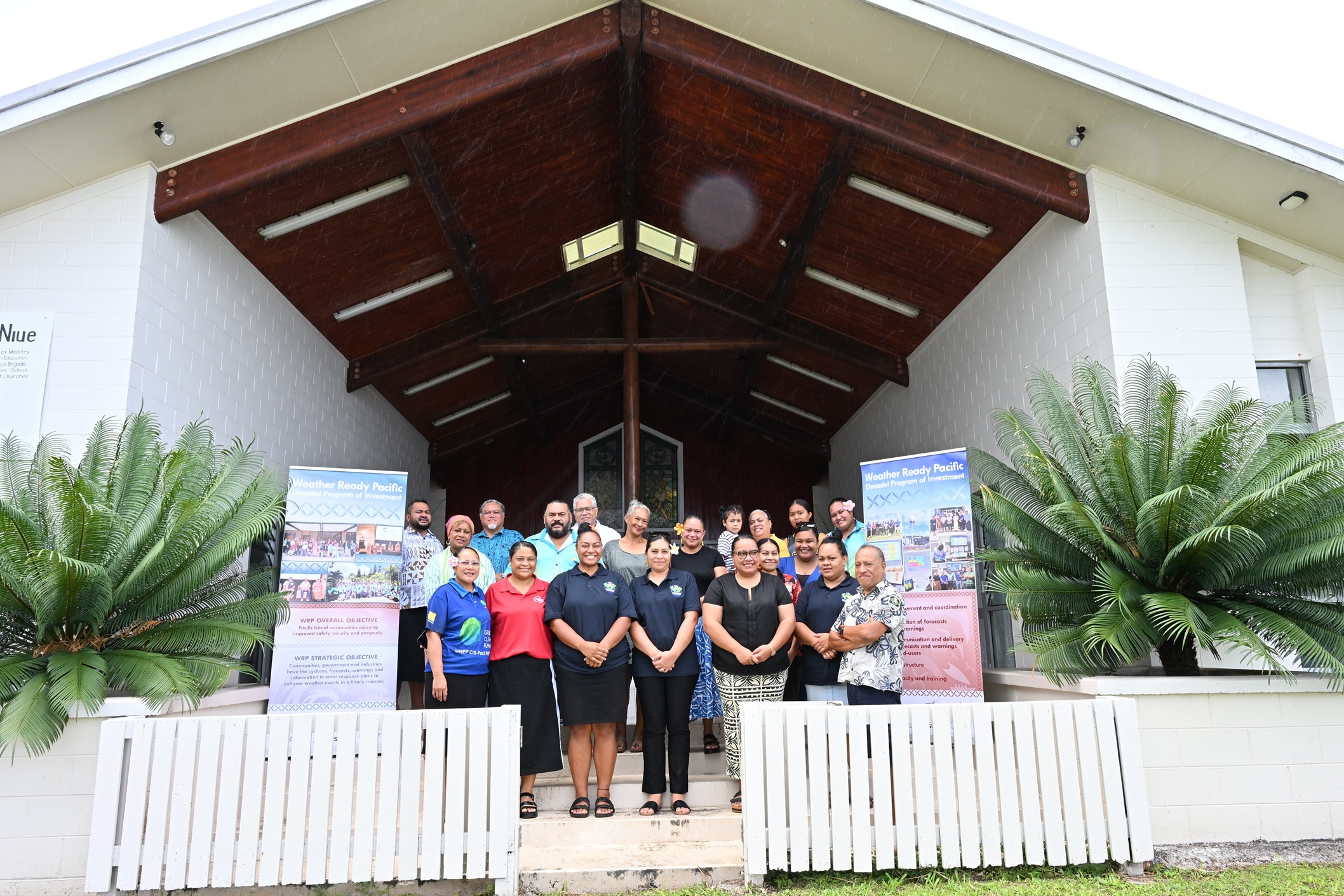
The active participation of the NDMO in the workshop was itself a positive step toward deepening that partnership, demonstrating that the commitment to coordinated action goes beyond policy and into practice.
“We would like to acknowledge our partners, Niue Disaster Management Office, Director Mr Robin Hekau and his team for joining us today, as well as all our sector partners, media and community members present. Good communication relies on having the trust of your community, and by building and taking care of those relationships is how we ensure we are doing our job and serving our people,” said Ms Mitiepo.
A central theme of Day 1 was the importance of treating communications as a two-way channel. Information must not only flow outward, but flow back, allowing communities to ask questions, share observations, and confirm that messages are understood. Participants also explored how a GEDSI lens should sit at the heart of communications planning: asking who is being reached, who might be missed, and how messages can be tailored to ensure no community member is left without life-saving information.
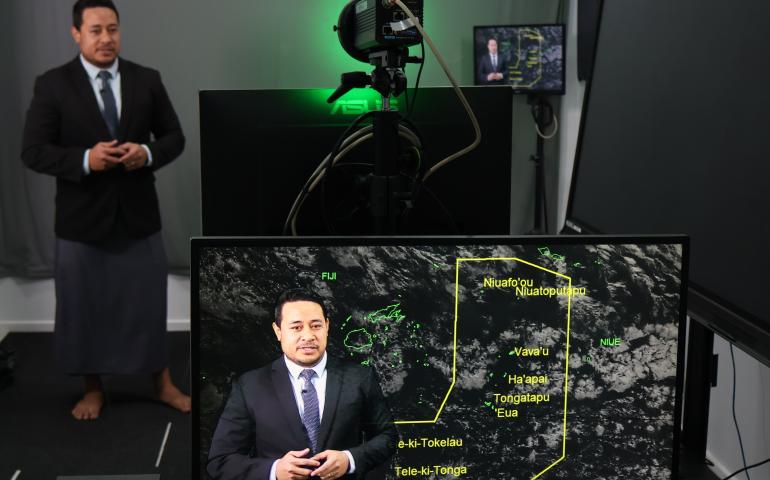
During the training, participants were introduced to the role of Artificial Intelligence (AI) as a practical drafting tool, showing how AI can help simplify complex meteorological and scientific information into plain language that is accessible to general audiences. This was framed carefully and responsibly with participants equally introduced to the risks of AI use, including issues of data privacy and intellectual property, as well as understanding that AI is not always right.
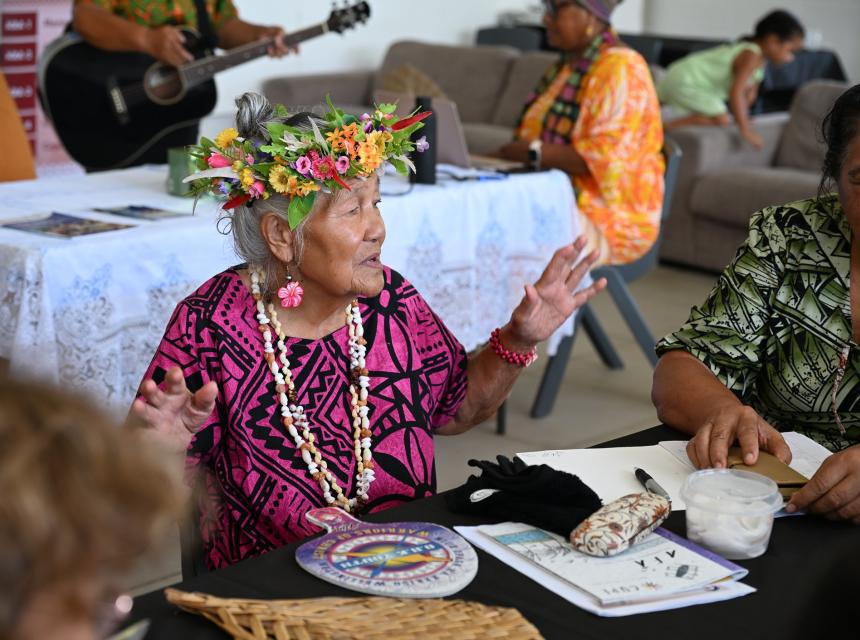
On Day 2, elders, women’s leaders, and community stakeholders shared their past experiences living through some of the worst tropical cyclones to impact Niue, it became clear that the principles of GEDSI: gender equality, disability, and social inclusion; are not a foreign framework to Niueans. Rather, they are a way of life this close-knit island community has long practised, even if not always by that name.
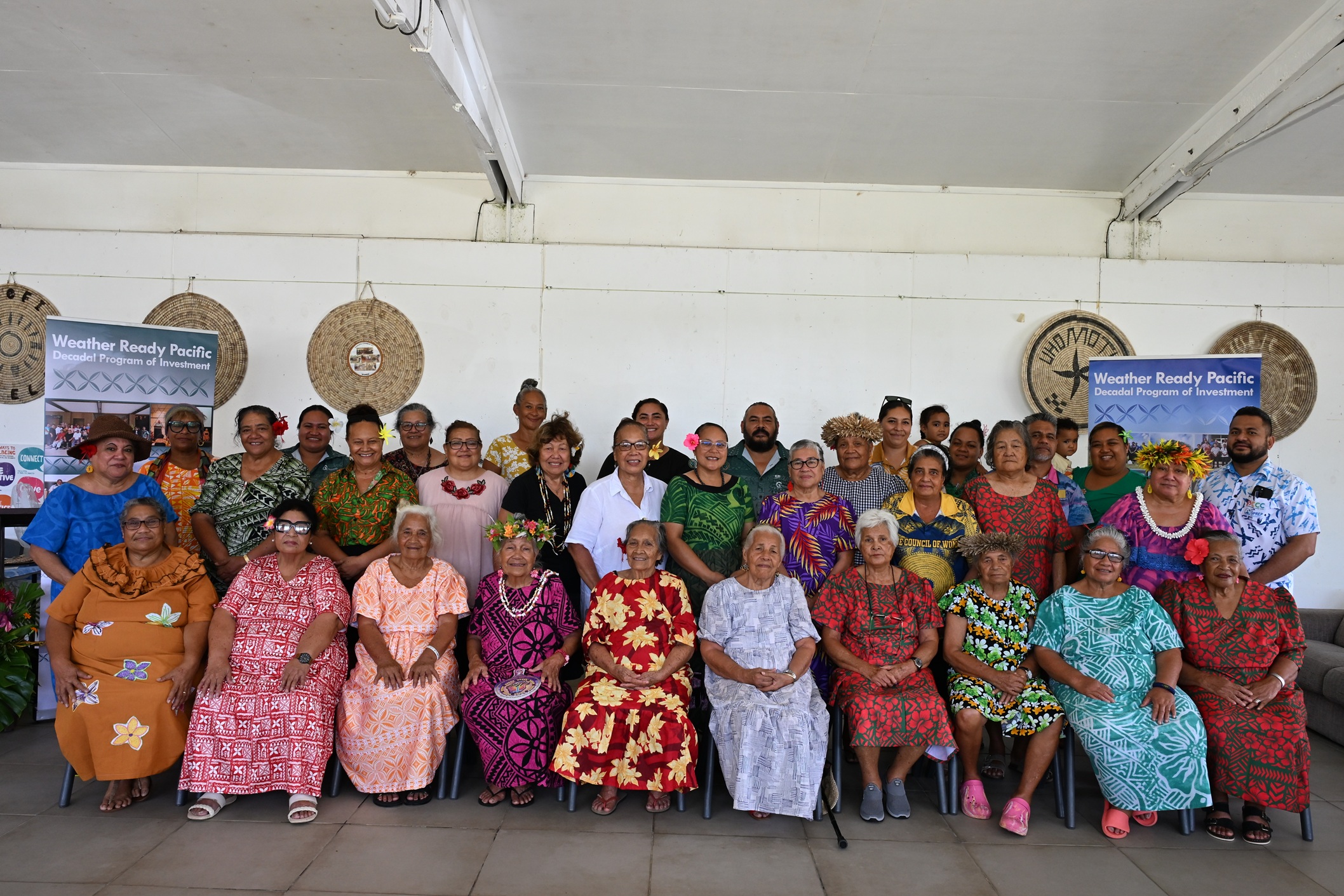
GEDSI in the context of early warning systems means ensuring no one is left behind, and that, every person, particularly the marginalised, persons with disabilities and the under-represented, have equal access to life-saving information that is tailored to their specific group needs, and have recommended actions. The elderly and persons with disabilities often receive warnings later or face mobility barriers to acting on them. Meaningfully including them, and under-represented groups, in the decisions that affect their safety, ensures a GEDSI-responsive alert.
Participants reflected on the fabric of Niuean society: a community where everyone has a role, where neighbours look out for neighbours, and where no household is left to face hardship alone. The training helped participants recognise that this instinct, is itself the foundation of a truly inclusive early warning system.
The most powerful moments came through the sharing of personal stories. Elders and community members spoke candidly about past disasters; what information reached people and, crucially, what did not. Those most vulnerable: the elderly, persons with disabilities, those living alone, were often the last to receive warnings. These stories were not told with bitterness, but with the wisdom of those who want to ensure they are not repeated. The Niue Women’s Council offered valuable perspectives on how women and elders navigate risk and information; insights too often absent from formal planning.
Across both days, one message surfaced with striking consistency: technology must not overshadow the wisdom embedded in Niuean culture and community practices. Participants were clear that traditional knowledge: the environmental signs, intergenerational lessons, and community networks, must stand alongside modern systems, not beneath them. When technology fails, it is this knowledge and these relationships that carry communities through.
“Traditional knowledge that has been passed down through generations has long guided our Niuean communities in reading the environment and preparing for disasters. It’s important that we don’t forget that because when technology and modern communication channels fail, we can fall back on the traditional signs we have learned from our elders, and ensure we teach it to future generations too,” said Ms Felicia Pihigia Talagi, Director, Project Management & Coordination Unit, Ministry of Finance.
What the two days ultimately affirmed is that effective, inclusive disaster communications is not about adding a checklist to existing plans. It is about deepening what Niue already does naturally, ensuring that the community’s instinct to look after one another is reflected in every warning issued, every message communicated, and every plan prepared.
“It is important that we take to heart and learn from the disasters that have occurred and have impacted our lives in the past. If Cyclone Heta visited Niue again tomorrow, will you be able to say that you are prepared?” said Mr 'Ofa Fa’anunu, Programme Manager, Weather Ready Pacific Programme.
“We have to think about our context in the islands so that when disasters strike, we are able to respond appropriately and accurately to help our families and communities. We need to empower communities across all ages and gender. It is important because we do not know where we will be on the day disaster comes, nor will we know what tools or resources will be available for us to respond and act accordingly.”
Mr Fa’anunu also stressed how important it is to meet people where they are, across every medium, in every generation, and with respect for the knowledge and culture they have been guided and shaped by for centuries. “Do not let go of the old signs passed down by our forefathers. Let’s empower our youth, our children, our elderly and our people living with disabilities. So that when the day or hour of disaster comes, they are not left behind and able to take life-saving actions. No one should die in a disaster because they are a girl, they are old, young or living with a disability. No one. Let’s work toward a Pacific that is Weather Ready For ALL, now.”
The WRP Programme’s work in Niue continues to support that vision: strengthening the systems, capacities, and relationships that ensure, when the next storm comes, no one is left behind.The WRP Niue Mission was also the first national GEDSI event after the recent launch of the WRP GEDSI Strategy, 2025- 2033. The Strategy has the overarching goal of ensuring that the programme addresses systemic barriers and ensures that all related activities are inclusive, accessible and equitable to all individuals, particularly Pacific women and girls in all their diversity and other vulnerable and under-served groups.
The two-day training was held at in Alofi, Niue, on 25 & 26 March 2026. Facilitators were the Weather Ready Pacific Programme team, who worked closely with Niue Met Services Director Rossy Mitiepo and staff in delivering the training.
About Weather Ready Pacific
The Weather Ready Pacific Programme is a decadal programme of investment managed by SPREP, endorsed by Pacific Leaders, aimed at strengthening hydrometeorological services across Pacific countries and territories. WRP is committed to Pacific-led, inclusive, and transformative approaches to weather and disaster resilience. Financial support is provided by the Governments of Australia and New Zealand, and the Weather and Climate Information Services (WISER) of the United Kingdom.
For more information, contact WRP Programme Manager, 'Ofa Fa’anunu: [email protected] or the Communications & Knowledge Management Officer, Angelica Salele-Sefo: [email protected]
- Log in to post comments