Not All Bad News: SPREP highlights potential benefits of El Niño for some Pacific island countries
While El Niño is often associated with drought and extreme prolonged dry conditions for the western Pacific and wetter than normal conditions in the central and easter Pacific, experts from the Secretariat of the Pacific Regional Environment Programme (SPREP) say the naturally-occurring climate phenomenon can also bring opportunities for some Pacific Island countries.
During SPREP's Pacific Environment and Innovation webinar series held on 15 June to mark the 33rd anniversary of the SPREP Treaty, the Pacific Climate Services team of SPREP’s Climate Science and Information programme explained that the impacts of El Niño vary across the region, but that not all of these impacts will be negative.
The webinar attracted more than 100 participants from SPREP's 26 Member countries, including students, government officials and development partners.
Representatives from the Climate and Oceans Support Program in the Pacific Phase 3 (COSPPac3), the Intra-ACP Climate Services and Applications (ClimSA) project and the Republic of Korea-Pacific Islands Climate Prediction Services (ROK-PI CliPS) project reaffirmed that an El Niño event has been declared and outlined what Pacific communities can expect in the coming months.
According to ROK-PI CliPS Project Coordinator, Mr Tile Tofaeono, El Niño is one of three phases of the El Niño-Southern Oscillation (ENSO), a naturally occurring cycle and part of the global climate system that influences rainfall, winds, and ocean conditions across the Pacific.
"There are three phases of ENSO – Neutral, El Niño and La Niña. These phases typically change every two to seven years and usually last between nine and 12 months, although some events can persist for up to two years," Mr Tofaeono said.
During El Niño, warmer-than-normal sea surface temperatures and weaker trade winds increase the likelihood of below-normal rainfall across much of the western Pacific, including American Samoa, southern Cook Islands, Commonwealth of the Northern Marianas, Federated States of Micronesia, Fiji, southern French Polynesia, Guam, Palau, Papua New Guinea, Pitcairn Islands, New Caledonia, Niue, northern Marshall Islands, Samoa, Solomon Islands, southern Tokelau, Tonga, southern Tuvalu, Vanuatu, and Wallis and Futuna.
For countries in the eastern and central Pacific, El Niño will mean cooler-than-normal sea surface temperatures and above-normal rainfall.
According to COSPPac3 Senior Climatologist, Mr Philip Malsale, these wetter conditions could bring important benefits for low-lying atoll nations.
"Countries such as Kiribati, Nauru and Tuvalu depend heavily on limited freshwater resources. While increased rainfall during El Niño will mean potential flooding for these countries, it will also be an opportunity to replenish freshwater lenses and improve water security, providing long-term benefits even after conditions return to neutral," Mr Malsale said.
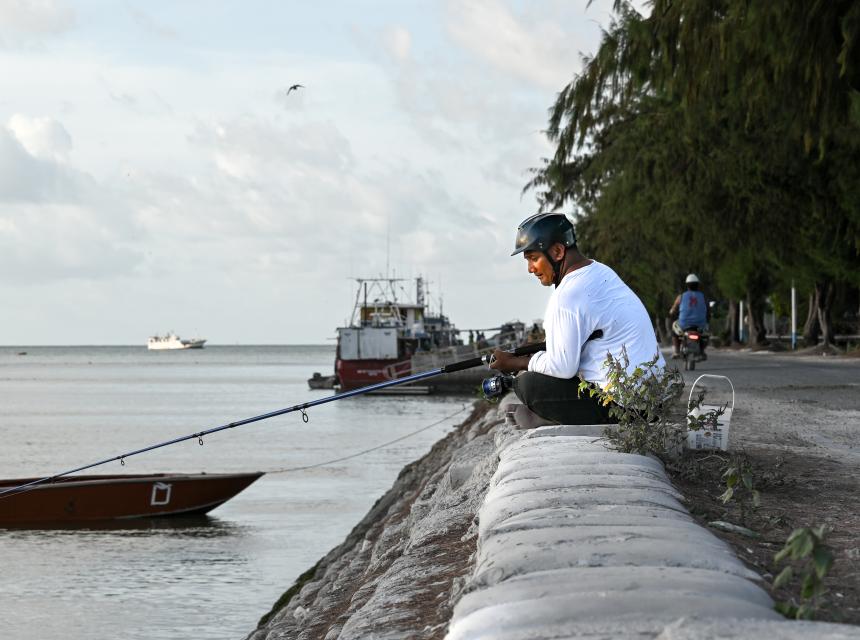
Kiribati could also experience increased tuna catches as ocean temperatures around the area become warmer than normal. The warm pool area is loved by the tuna, which will migrate towards the central and eastern Pacific following the movement of this warm pool during El Niño. This warm water will meet the colder, nutrient rich waters of the eastern Pacific packed with planktons and small fish which tuna rely on for feed. This biological shift pushes international fishing fleets to these countries as well, increasing fishing licenses and boosting national revenue.
Meanwhile, countries in the western Pacific experiencing drier conditions could also find opportunities amid the challenges.
Mr Malsale said prolonged dry periods can provide favourable conditions for infrastructure development, particularly projects that are often delayed by heavy rainfall periods. It is a time for the national government to roll out big infrastructure projects because there will be below normal rainfall and lot of sunshine hours and cooler temperatures.
Dry weather may also benefit tourism by bringing more sunshine and allowing visitors to enjoy a wider range of outdoor activities which can bring these economic benefits to the rural communities.
Increased sunshine and sometimes windy conditions could further support greater use of renewable energy, with increased contribution of wind and solar to the main power grid. This will greatly help countries mitigate the impacts of the ongoing global fuel crisis which has caused fuel prices to increase dramatically. This will also provide farmers with the opportunity to explore alternative livestock feed options and better manage existing stock during the dry season.
Despite these opportunities, Mr Malsale stressed that Pacific communities should continue preparing for the impacts of El Niño.
"El Niño is a slow-onset event and its impacts will not be felt immediately, but rather gradually over time," he said.
“These events are all part of our normal climate system and are completely natural. While we may be entering El Niño now, we won’t always be in this state. What is taken away during this phase will be replenished during the next phases, and the cycle will continue.”
"While it won't all be bad news, we urge our Pacific communities to prepare now, reach out to their National Meteorological and Hydrological Service and sectors for specific advice, so that they and their families can benefit later,” Mr. Malsale concluded.
For more information, please contact the Pacific Climate Services team at [email protected].
- Log in to post comments