Pacific Climate Officers Learn to Code their own National Forecasts
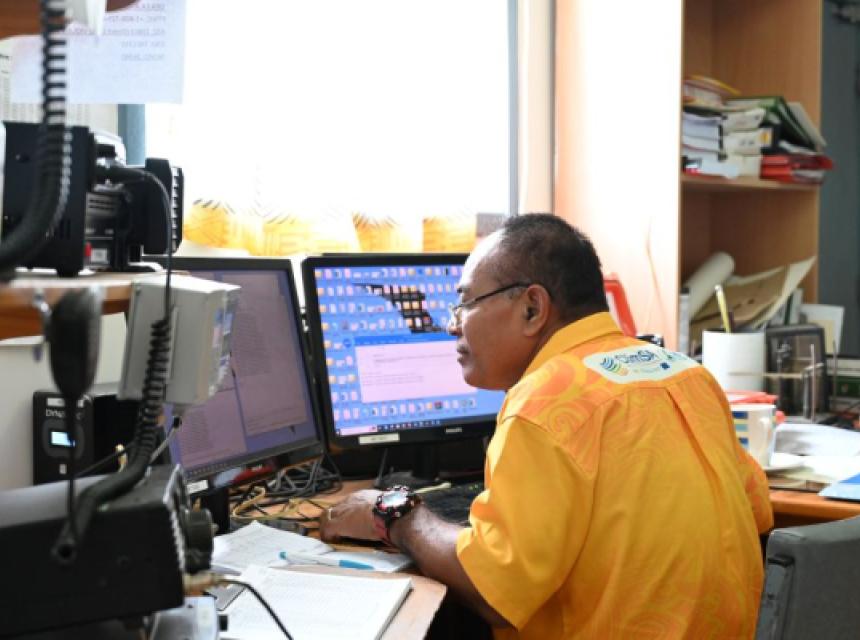
Most National Meteorological and Hydrological Services (NMHSs) in the Pacific still depend on proprietary “black box” software to generate the climate products their countries rely on. The tools work, but the people using them can’t see inside them, can’t adapt them, and can’t fix them when something breaks. If that one staff member who knows how to run a critical script leaves, the climate product stops being produced. When this happens, the bulletin does not go out to those who rely on them, and the seasonal outlook doesn’t get updated. This is the gap that a three-day Train-the-Trainers workshop aimed at strengthening computational climatology in Suva set out to close.
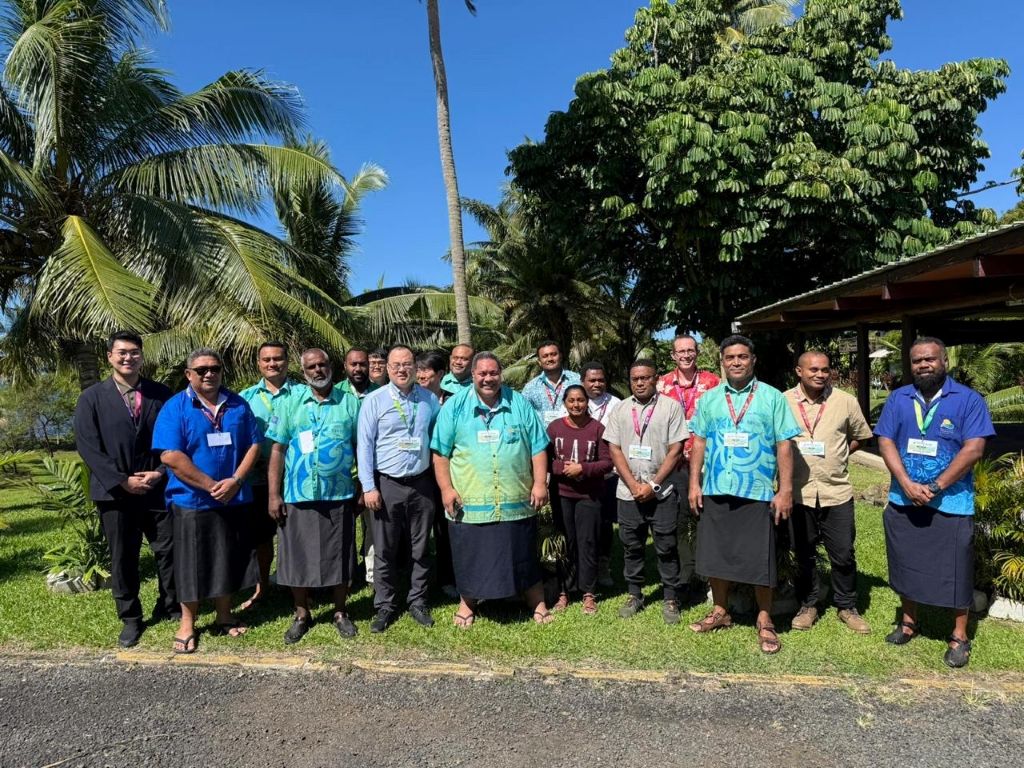
Held from 12–14 May, 2026 at the University of the South Pacific’s Statham Campus, the ICT Scripting and Programming Train-the-Trainers Workshop brought together IT specialists from the meteorological services of Fiji, Solomon Islands, Papua New Guinea and Vanuatu, alongside technical staff from Earth Science New Zealand (ESNZ), the Pacific Community (SPC), USP and the Secretariat of the Pacific Regional Environment Programme (SPREP).
Funded by the European Union through the ClimSA Pacific programme and facilitated with technical delivery from contracted Korean climate technology firm Weatherpia, the workshop was designed around a single premise: that Pacific meteorological services should own the code behind their climate products, and not just the outputs.
“The objective is to strengthen our local technical capacity, to ensure that the people responsible for our weather and climate data aren’t just using tools but mastering the technology behind them to solve local problems,” said Mr. Salesa Nihmei, Director of SPREP’s Climate Science and Information Programme.
Across the Pacific, NMHSs hold decades of climate observations in national databases, but much of this data remains underutilised because the technical capacity to process, analyse and visualise it, has not kept pace with the volume of information now available. Global reanalysis datasets and satellite products offer increasingly high-resolution coverage of the Pacific, yet many services lack the scripting skills to access, filter and integrate these datasets into their national products. This results in a persistent disconnect, where the raw data exists, but the locally tailored climate information that communities, fisheries managers and disaster agencies need is often delayed, incomplete or produced through manual workflows that are difficult to sustain.
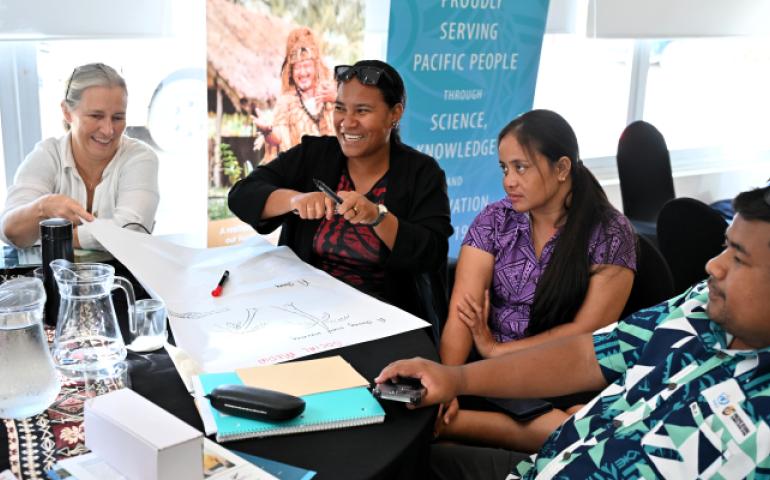
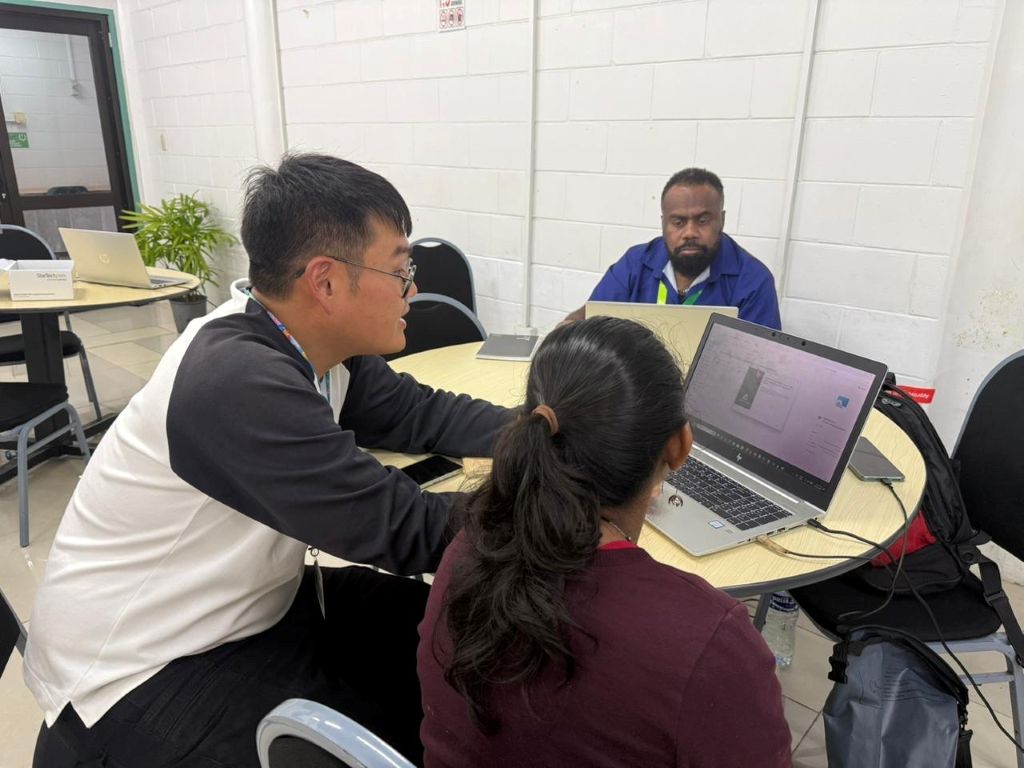
This training enabled participants hands-on training in Python, an open-source programming language increasingly used by meteorological agencies worldwide, and learned to work directly with climate data formats such as NetCDF and GRIB. These are the standard file types that carry global model outputs and satellite observations. The practical sessions covered how to connect scripts to the CliDE climate database that most Pacific NMHSs already use, how to automate routine products like monthly climate bulletins so they no longer require manual processing, and how to generate publication-ready maps and charts from raw data.
A module on model verification gave participants the technical grounding to test how well global climate models perform against their own local observations, which is a critical capability for any met service producing seasonal forecasts or contributing to national adaptation planning.
“The training strengthened my understanding of how Python scripting, automation, statistical processing, and advanced plotting can support weather and climate data analysis and improve the way we deliver our services,” said Mr. Atish Kumar, Climate Database Administrator at the Fiji Meteorological Services.
“What I appreciated the most was the hands-on approach, where we were able to apply the concepts directly and see how these skills can be used in our own work when we get back to office,” he explained.
The workshop also introduced participants to sustainable software engineering practices, including version control through Git, structured documentation, and the FAIR data principles (Findable, Accessible, Interoperable, Reusable) that are becoming standard across international research and operational meteorology. These are the difference between a script that only one person can run from their desktop and a documented, reproducible workflow that any trained officer in the service can maintain. This is what the Train-the-Trainers model aims to achieve.
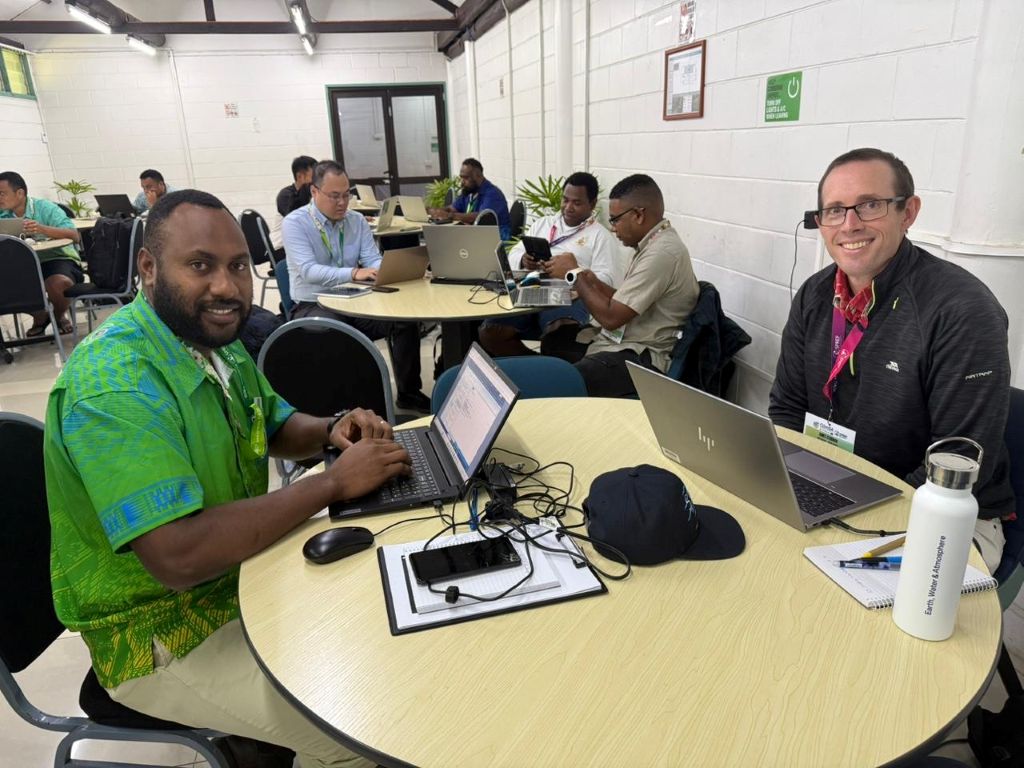
The participants selected for this workshop were experienced IT officers and technical staff, chosen specifically because they have the background to absorb the material and the ability within their own meteorological services to teach it forward. Each participant will return to their national meteorological office, equipped to run equivalent training for colleagues, extending the reach of the workshop well beyond the first training held in Suva. The training package participants carry home include session plans, training materials and working code repositories that can be adapted to each country’s data environment.
By equipping Pacific climate officers with the programming skills to bridge that gap, and embedding those skills within a train-the-trainer structure that builds institutional rather than individual capacity, ClimSA Pacific is investing in the long-term operational independence of the region’s meteorological services.
About ClimSA Pacific:
The Climate Services and Related Applications (ClimSA) Programme in the Pacific is a transformative initiative funded by the European Union and implemented by SPREP in partnership with the ACP Secretariat. ClimSA Pacific aims to strengthen climate information services, enhance early warning systems, and empower decision-making across key sectors through tailored, actionable climate products. By supporting National Meteorological and Hydrological Services (NMHSs) and regional coordination, ClimSA Pacific is building a more resilient and climate-informed Pacific community.
- Log in to post comments