El Niño conditions confirmed: SPREP urges coordinated regional response
El Niño conditions have now been established in the Pacific. Sea Surface Temperature (SST) and Southern Oscillation Index (SOI) values have met the established thresholds required to formally declare El Niño conditions.
El Niño is a natural climate pattern that occurs when sea surface temperatures in the central and eastern Pacific Ocean become warmer than usual. This changes rainfall and wind patterns across the region. El Niño events usually occur every two to seven years and can last from several months to more than a year.
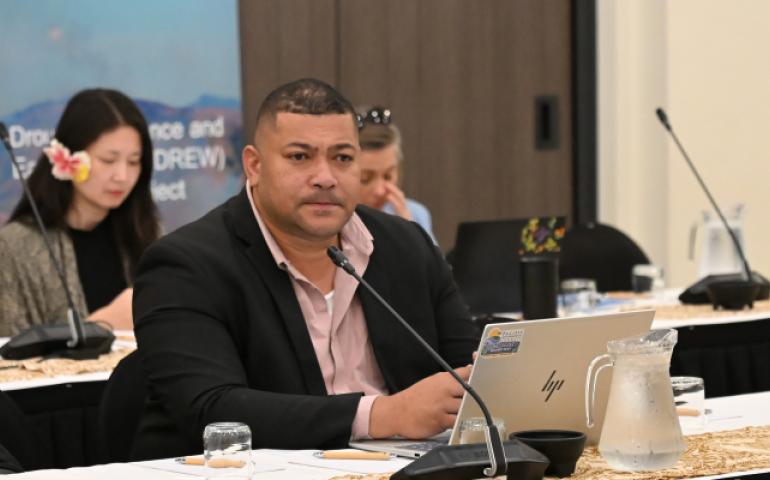
“We look forward to working with our Met Services and partners for a coordinated regional response across our Pacific as we enter this period,” said Mr Salesa Nihmei, Director of Climate Science and Information of the Secretariat of the Pacific Regional Environment Programme (SPREP).
“Over the coming months, Western Pacific countries are likely to experience drier-than-usual conditions, increasing the risk of drought. National authorities and communities in this sub-region are advised to begin proactive water management planning.”
In contrast, Central and Eastern Pacific Island countries, including the Northern Cook Islands, can expect above-normal rainfall during this period.
Typically, El Niño alters the regions in which tropical cyclones form, with genesis zones shifting eastward across both hemispheres. Genesis zones are the areas of ocean where tropical cyclones most commonly develop. During El Niño, warmer waters shift further east, making it more likely for cyclones to form in these new areas instead of their usual locations.
In the North Pacific, the genesis zone is expected to move closer to the Marshall Islands, shifting from its typical position near the Philippines and Guam. In the South Pacific, the genesis zone is expected to shift closer to Samoa, Niue and Cook Islands, moving away from its usual position near Vanuatu, New Caledonia, and the Coral Sea.
While El Niño conditions are generally associated with drier-than-normal weather and increased drought risk in the Western Pacific, short-term heavy rainfall events can still occur within this broader pattern. Even where such events take place, monthly and seasonal rainfall totals may remain below average overall.
“Past El Niño transition phases have shown that short-term weather events of this kind can create the potential for mixed messaging. There is a risk that such events may be misinterpreted in the media, affecting how the broader El Niño outlook is understood and communicated,” said Mr Nihmei.
“It is therefore important to clearly distinguish between short-term weather events and the broader El Niño climate signal, to avoid confusion or misunderstanding among the public and media,” said Mr. Nihmei.
The public is encouraged to connect with their National Meteorological Services for the most locally relevant and up-to-date information.
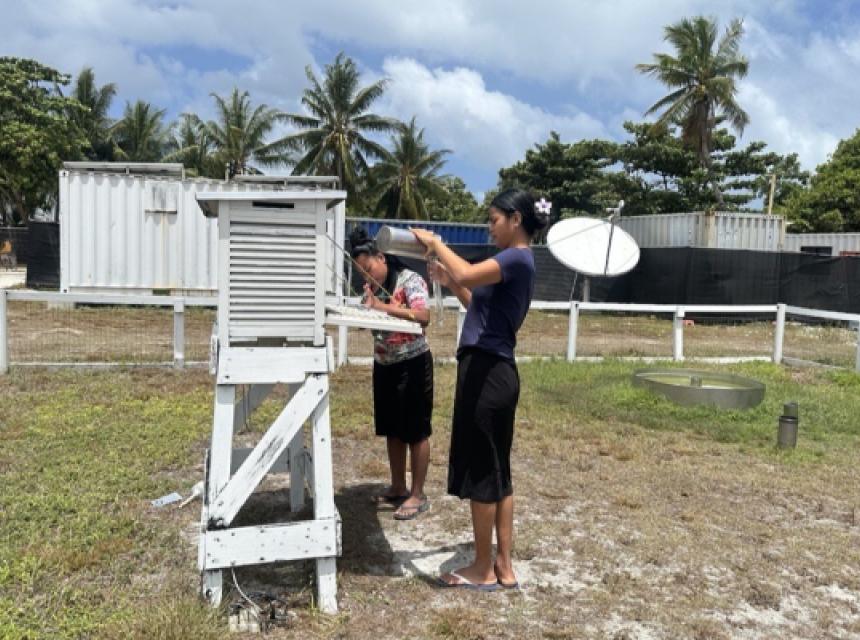
The Pacific Climate Services Team within SPREP have carefully reviewed individual statements issued by Pacific Regional Climate Centre (RCC) Nodes, supported by consistent indicators across the network. The RCC Nodes that have issued statements or their El Niño Southern Oscillation (ENSO) indicators (ocean and atmosphere indicators) which have reached El Nino threshold are the APEC Climate Center (APCC), the Bureau of Meteorology (BoM), Earth Sciences New Zealand (ESNZ), and the U.S. National Oceanic and Atmospheric Administration (NOAA).
The Pacific Climate Services Team will be closely monitoring the situation and provide regular updates on El Niño and its implications for the Pacific. These updates will be shared through the SPREP website and SPREP social media platforms.
- Log in to post comments