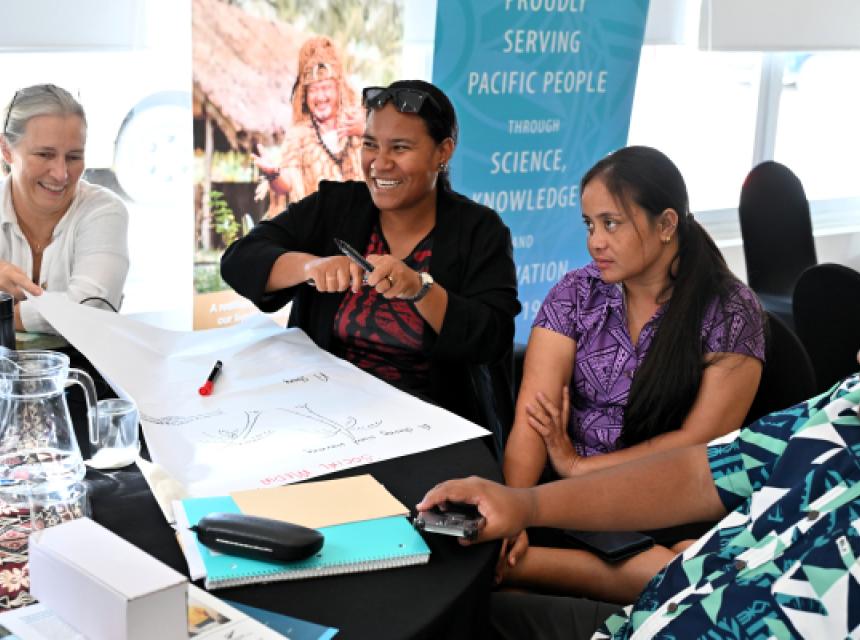
Keeping Pacific communities safer through strengthened climate and weather reporting
8 September 2026, Nuku’alofa – The Pacific media plays an important role in keeping communities safe from climate and weather events such as tropical cyclones, flooding, droughts, and El Niño and La Niña by communicating vital weather and climate information and stories to people right across the region, including those in the last mile.
This was the impetus behind the organisation of the Pacific Media Mana Class, held ahead of the eighth meeting of the Pacific Meteorological Council (PMC-8) in Nuku’alofa this week.
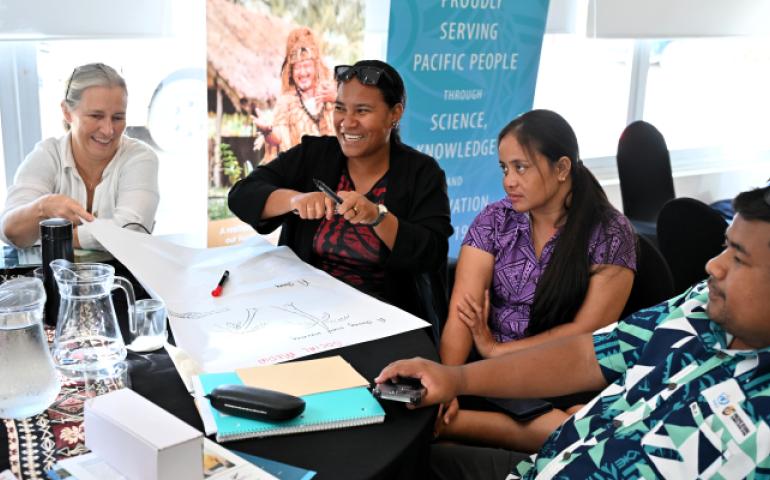
Twelve journalists and journalism students, together with six science communications officers from Pacific National Meteorological and Hydrological Services (NMHSs) in Fiji, Kiribati, Papua New Guinea, Samoa, Tonga, Tuvalu and Vanuatu, were selected to participate in the two-day Mana Class. Following the training, participants will form the Pacific Media team, providing coverage of PMC-8 and the Ministerial meeting that follows next week.
The Pacific Media Mana Class is a joint partnership between the Secretariat of the Pacific Regional Environment Programme (SPREP) and the Pacific Community (SPC), through the Climate and Oceans Support Program in the Pacific (COSPPac). The initiative aims to strengthen the capacity of Pacific journalists to report on weather and climate issues accurately, effectively and in ways that are relevant to Pacific communities.
COSPPac is an Australia- and New Zealand-funded programme that supports Pacific NMHSs to deliver useful and usable climate and ocean information services, helping Pacific peoples build resilience to the impacts of climate change and disasters.
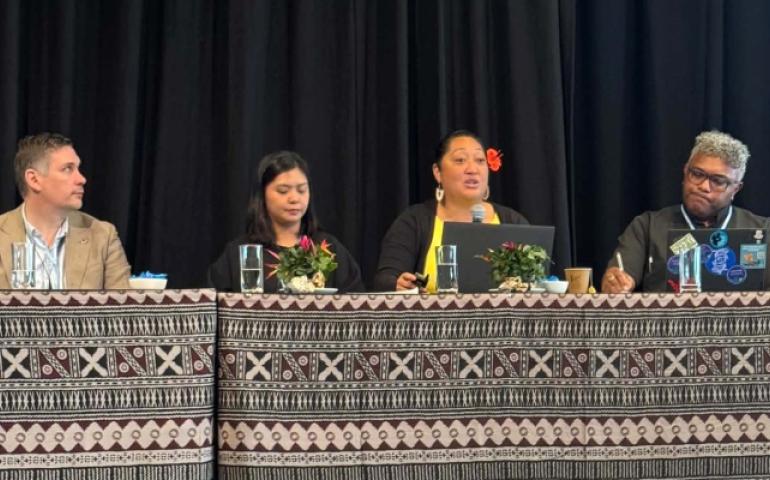
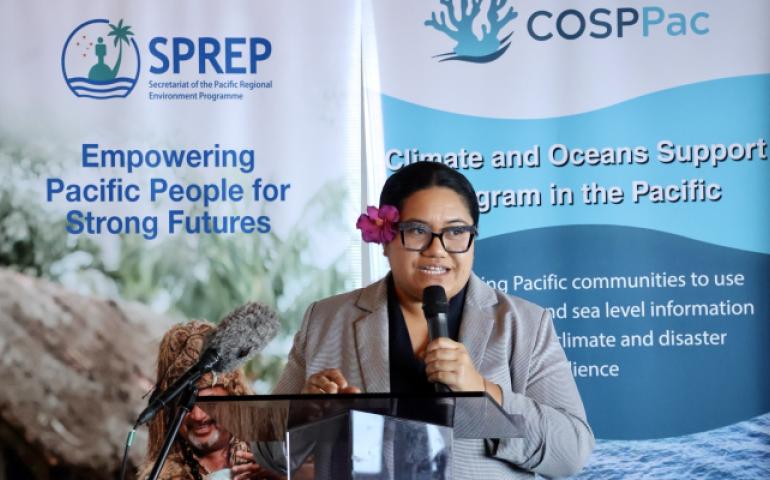
The Deputy High Commissioner of Australia to Tonga, Ms. Jane Livesey, and a representative of the New Zealand High Commission joined the Government of Tonga, SPREP and SPC to officially open the Media Mana Class.
Ms. Livesey said Australia was proud to support the initiative through COSPPac alongside New Zealand.
“Australia is proud to support this initiative through COSPPac alongside New Zealand.”
She added that Australia recognises the critical role of trusted media in helping communities prepare for and respond to increasing climate- and weather-related risks.
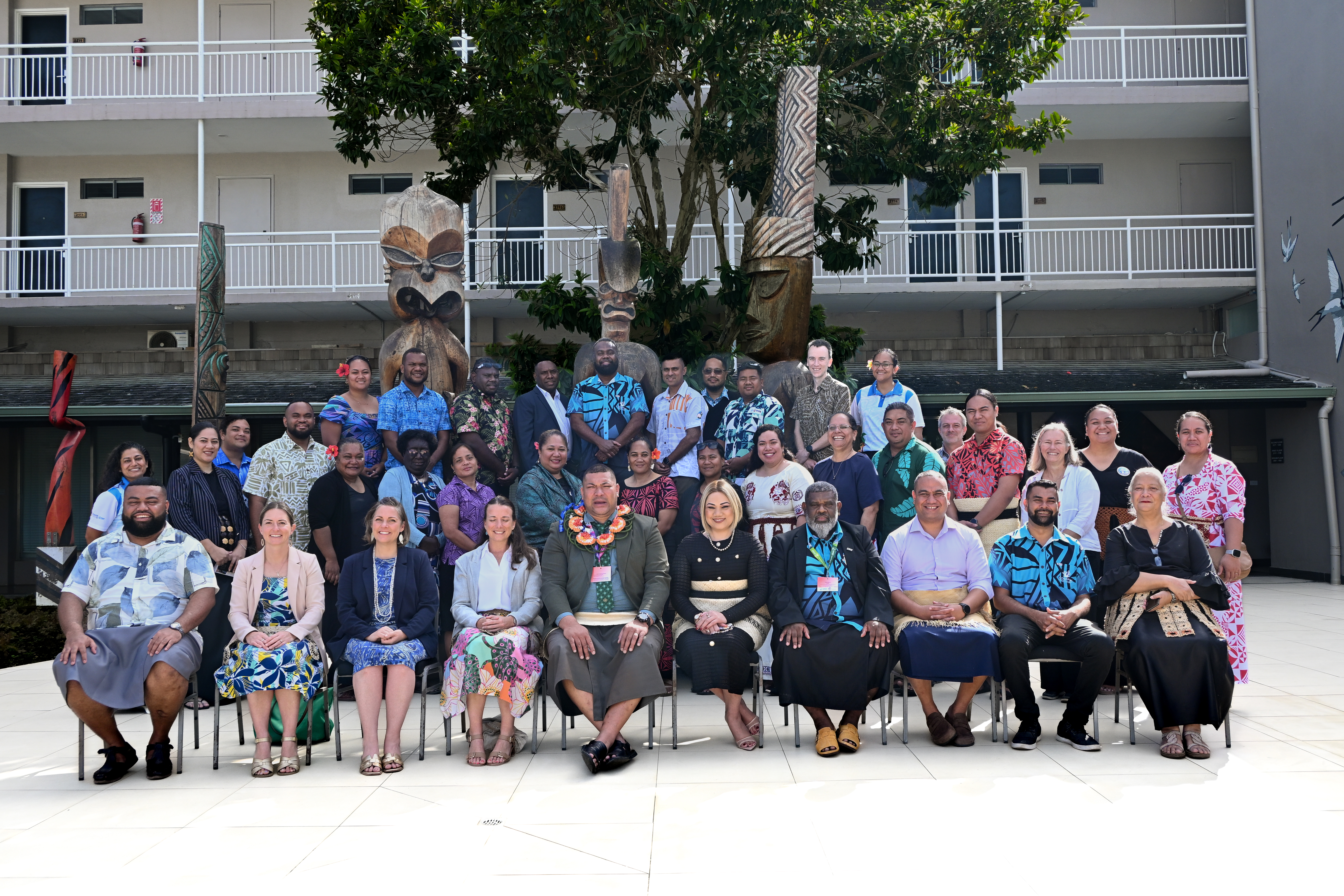
The participants of the Pacific Media Mana Class 2026 with representatives from the Government of Tonga, Australian and New Zealand High Commissions, SPC, and SPREP.
“Your reporting helps connect expert knowledge with everyday decision-making. It helps ensure that important regional discussions are accessible to Pacific communities and that Pacific voices, experiences and perspectives are heard.”
Ms. Esther Shaw, representative of the New Zealand High Commission in Tonga, said the Media Mana Class represents an important investment in Pacific capability, leadership and storytelling.
“The strength of the Pacific has always come from sharing knowledge, building relationships, and working together. New Zealand remains committed to working alongside Pacific countries to strengthen resilience, support climate action and empower Pacific voices,” Ms. Shaw said.
The Director of Tonga Meteorological Services, Mr. Laitia Fifita, welcomed the journalists to the Kingdom of Tonga and stressed the importance of initiatives such as the Pacific Media Mana Class in strengthening the relationship between Pacific NMHSs and the media.
“The media is a voice that empowers our people. It is also the same voice that protects the lives and livelihoods of our Pacific people,” Director Laitia said.
“We, at the Met Service, need the media to help us in the work that we do. While we provide science, forecasts and early warnings to advise our people, the stories that the media write add value to the work that we do.”
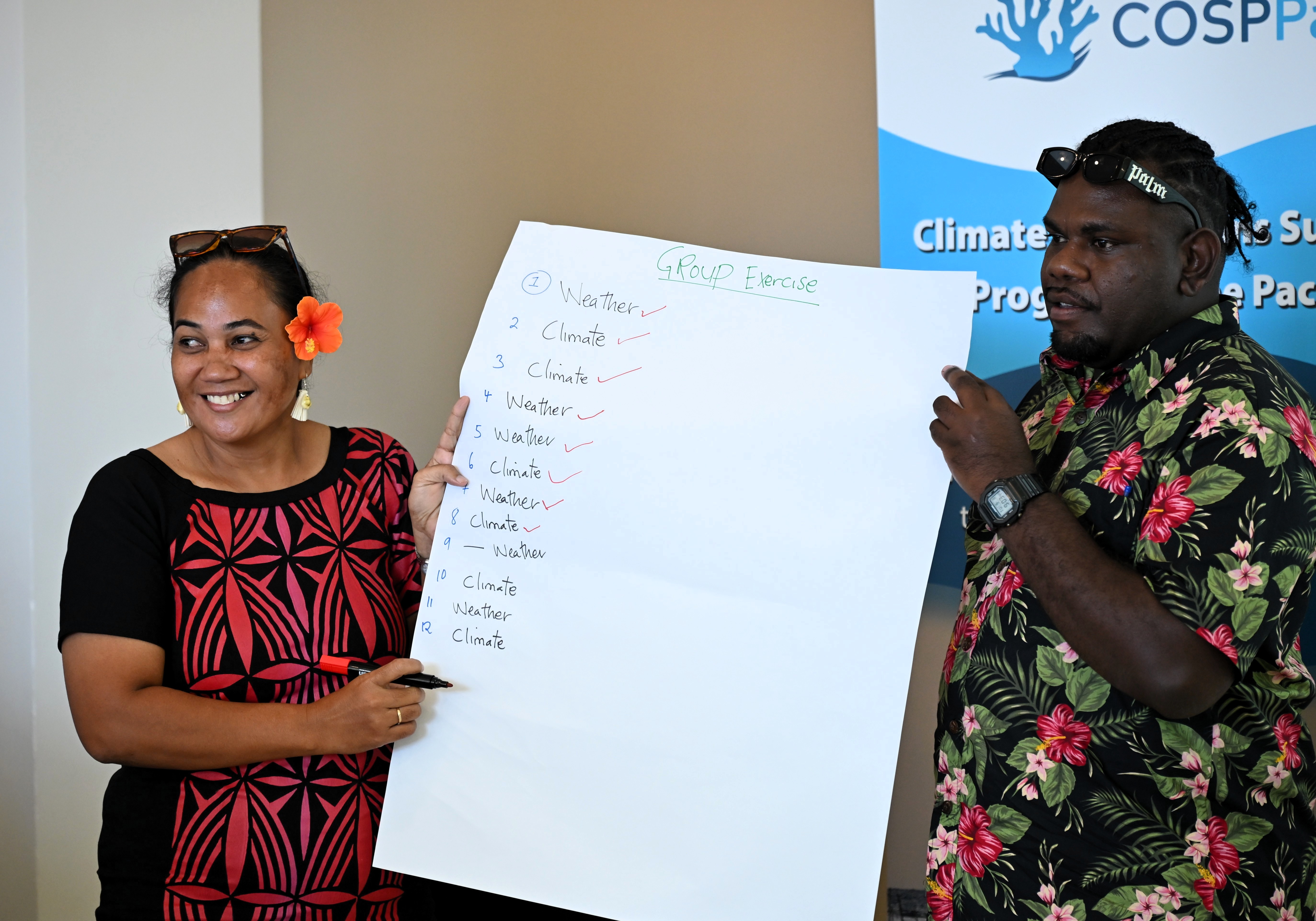
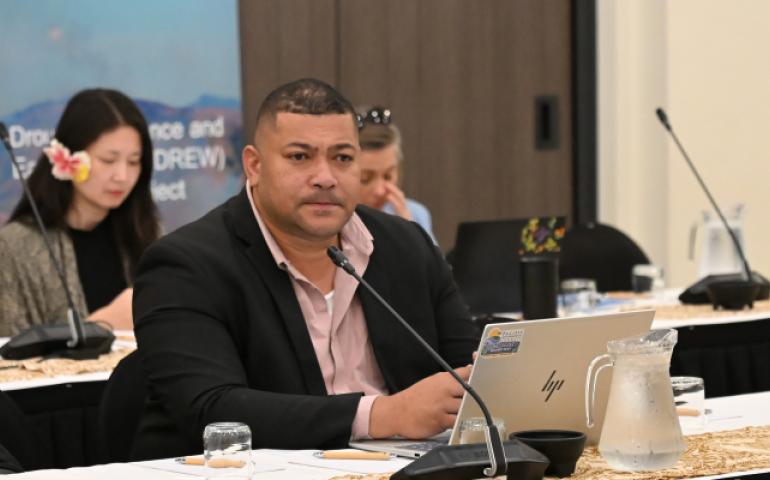
Ms. Siomea Tiute of Tuvalu and Mr. Ezra Toara of Vanuatu.
Mr. Salesa Nihmei, Director of SPREP’s Climate Science and Information Programme, reaffirmed SPREP’s commitment to strengthening weather and climate services across the Pacific, while ensuring that communication of this information is strengthened alongside the science.
“It has been more than a decade since SPREP committed to building the capacity of our Pacific journalists and also our Pacific Meteorological staff, to ensure that weather and climate information is communicated effectively and accurately.”
Mr. Nihmei said the partnership between Pacific NMHSs, regional agencies such as SPC and SPREP, and the media is critical to ensuring that scientific information reaches the people who need it most.
“The partnership between Pacific NMHSs, regional agencies such as SPC and SPREP, and the media is important, because while we have the science, observations, forecasts, and warnings, it is the media that helps us get that information to the last mile,” Mr. Nihmei said.
“This week, we invite you to join our canoe, to sit in our meetings and to be part of our discussions. We welcome you to our Pacific met community,” he concluded.
The Pacific Meteorological Council is a specialised subsidiary body of the Secretariat of the Pacific Regional Environment Programme (SPREP), established to facilitate and coordinate the scientific and technical programmes and activities of Pacific National Meteorological and Hydrological Services.
The eighth meeting of the Pacific Meteorological Council (PMC-8) is being held from 10–14 September 2026 in Nuku’alofa, Tonga. It follows a series of pre-meetings beginning on 7 September 2026 and will conclude with the convening of the fourth Pacific Ministerial Meeting on Meteorology (PMMM-4) on 16 September 2026.
PMC-8 and PMMM-4 are made possible through the partnership and collaboration of the Government of Tonga, SPREP, the World Meteorological Organization Climate Risk and Early Warning Systems (WMO-CREWS) project, United Kingdom Weather and Climate Information Services (UK-WISER), Australian Department of Foreign Affairs and Trade (DFAT), New Zealand Ministry of Foreign Affairs and Trade (MFAT), Weather Ready Pacific Programme (WRPP), European Union-funded Intra-ACP Climate Services and Applications programme (ClimSA), Climate and Oceans Support Program in the Pacific (COSPPac), Republic of Korea-Pacific Islands Climate Prediction Services Phase 3 project (ROK-PI CliPS 3), APEC Climate Centre (APCC), and the Pacific Community (SPC).
- Log in to post comments